法语中的未完成过去时(L'imparfait)是用来描述过去的时态。它用来表示过去正在进行的状态或是未完成的重复动作。动作或是状态的起始结束时间是未知的。它的用法相当于英语中的 "was" 或是 "was ___-ing."
未完成过去时的用法有下面几种:
1、表示习惯的动作或是某个状态
Quand j'étais petit, nous allions à la plage chaque semaine.
When I was young, we used to go to the beach every week.
L'année dernière, je travaillais avec mon père.
I worked with my father last year.
2、用来描写自然状态或是情绪状态,如:时间、气候、年龄、感受
Il était midi et il faisait beau.
It was noon and the weather was nice.
Quand il avait 5 ans, il avait toujours faim.
When he was five, he was always hungry.
3、在一段不明起止的时间内的动作或状态
Je faisais la queue parce que j'avais besoin de billets.
I stood in line because I needed tickets.
Il espérait te voir avant ton départ.
He was hoping to see you before you left.
4、与过去完成时(passé composé)连用,表示其动作发生的背景
J'étais au marché et j'ai acheté des pommes.
I was at the market and I bought some apples.
Il était à la banque quand il l'a trouvé.
He was at the bank when he found it.
5、表示愿望或建议
Ah ! Si j'étais riche !
Oh, if only I were rich!
Si nous sortions ce soir ?
How about going out tonight?
6、用于si引导的条件句中
Si j'avais de l'argent, j'irais avec toi.
If I had some money, I would go with you.
S'il voulait venir, il trouverait le moyen.
If he wanted to come, he would find a way.
7、用于短语 être en train de 和 venir de 的过去时
J'étais en train de faire la vaisselle.
I was (in the process of) doing the dishes.
Il venait d'arriver.
He had just arrived.
变位形式
未完成过去时的变位
去掉现在式第二人称复数(nous)的词尾 -ons,加上-ais,-ais,-ait,-ions,iez,-aient
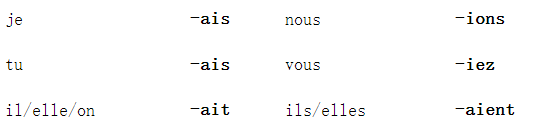
唯一一个不例外的动词是Être,它用词根ét-开头,但词尾规律仍是这样的。
例:
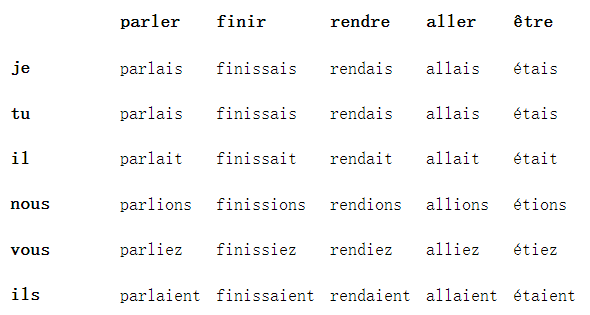
注意:
1、以-cer 和 -ger 结尾的动词变位后写法上有点特例
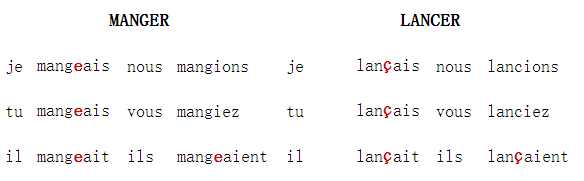
这样做是为了发音上的便利。g 和 c 后跟一个 a 的音要发浊音,若是在 g 后添加了一个 e ,或是变c为 ç 可以软化发音,使之成为清音。
2、以i结尾的未完成过去时动词词根,在第一人称复数(nous)和第二人称复数(vous)变位时须要双写i 。如:
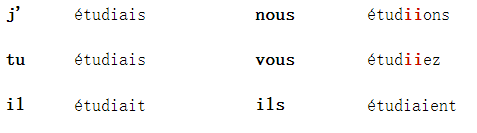
étudier
nous étudions
未完成过去时词根:étudi-
如果大家想要了解法语的知识,可以定制法语专属精品课程,量身定制适合的学习方案,激发学习兴趣,学生们将在轻松愉快的氛围中掌握语言学习的技巧和方法。如有任何疑问或需要更多信息,请随时联系新东方欧亚教育的专业老师进行咨询。